KHONSUFIND WHAT TIME REVEALS
AN OBSERVATORY THROUGH TIME

THE SKY
REMEMBERS.

Move through real SPHEREx observations.
Find what time reveals.

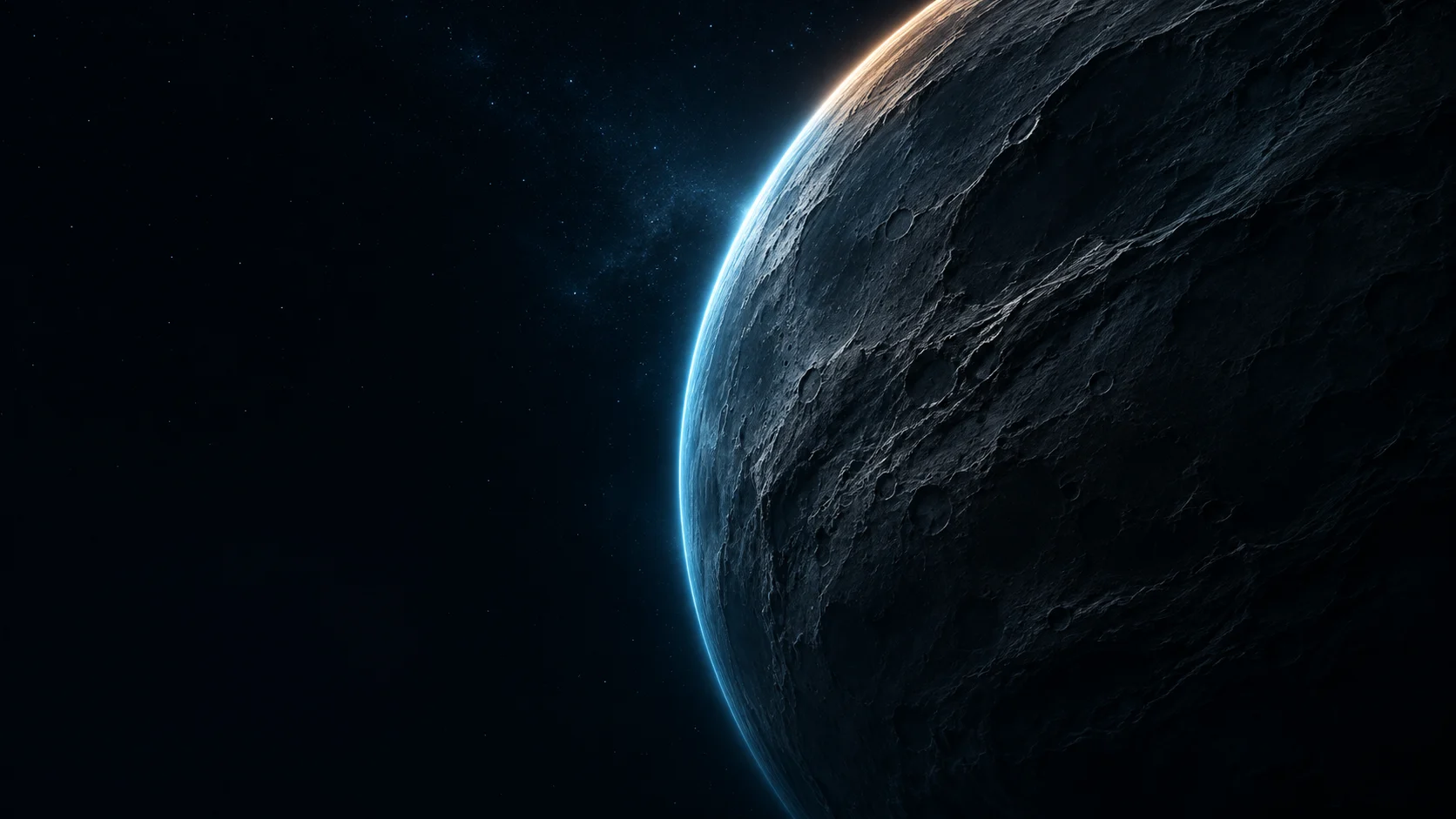
A DIFFERENT WAY TO LOOK ILLUSTRATIVE PLANET & SKY / NOT TELESCOPE DATA
NASA SPACE APPS 2026 / BYTEBOYZREAL IMAGES. REAL OBSERVATION DATES.YOUR EYE FOR CHANGE.
THE OBSERVER'S JOURNEY / 01 → 03
SKIP TO THE FIELDS ↓
01 / FIND YOUR FIELD

A coordinate.
A place to begin.

Choose a familiar target or enter right ascension and declination. Set how much sky you want to see.

SPHEREx sees infrared light. These images reveal a different view from the night sky you see with your eyes.

RIGHT ASCENSION
133.76012°
DECLINATION
−07.24213°
WISE 0855 field centre / illustrative diagram
02 / MOVE THROUGH TIME

The same sky.
Another moment.

Slide between actual observation dates. Pause, rewind, or blink two images to look for something worth investigating.

No invented frames between dates. Different wavelengths, blur and missing data can also create apparent changes.

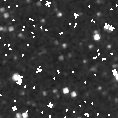
Prepared SPHEREx WISE 0855 field, 07 Nov 2025, 20:31 UTC
DR1 / 1.413 μm2025W45_2A_0292_2
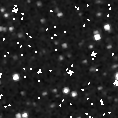
Prepared SPHEREx WISE 0855 field, 03 May 2026, 05:10 UTC
DR1 / 1.405 μm2026W18_2A_0663_1

REAL SPHEREx FIELD PREVIEWS / NASA · JPL-Caltech · IPAC
Native prepared images. No claim of target detection.

03 / FOLLOW THE EVIDENCE

Notice something?
Keep the context.

Inspect the quality, mark a position and write a note. Export the dates, coordinates and source references behind your question.

Clean View estimates are for viewing. Marks and evidence preserve original measurement validity.

THE OBSERVER'S RECORD
POSITIONCommon sky grid
OBSERVATIONActual UTC date
QUALITYOriginal validity mask
SOURCERelease + archive reference

YOUR NOTE
What changed? What else could explain it?

Illustrative record structure. Your private notebook keeps the context.
FIVE FIELDS TO BEGIN WITH

Every patch has a history.

Choose a target to set its coordinates.
You decide when to search the archive.

01Barnard's Star

High proper-motion star

3 comparable field frames

Large proper motion is useful context; a short SPHEREx baseline need not show a perceptible shift.

02Epsilon Indi B

Brown dwarf binary field

2 comparable field frames

The Ba/Bb pair is not expected to be resolved by SPHEREx; binary orbital motion is omitted from this field centre.

03WISE 0855

Cold brown dwarf field

3 comparable field frames

Very faint, red and blended at shorter wavelengths. Archive coverage does not establish a detection or measurable motion.

04R Draconis

Long-period variable star

Last query timed out

Brightness comparisons require matching wavelength, quality and calibration; an animation alone is not a light curve.

05RW Aurigae

Young variable star field

2 comparable field frames

Complex young-star variability is a hypothesis for inspection, not an automated classification.

Historical check: 14 November 2026, DR1 and QR3. Results can change. A timeout does not mean no coverage, and field frames do not establish a target detection. READ THE COVERAGE REPORT ↗

YOUR NEXT LOOK COULD RAISE A QUESTION.

Start with the sky.
Follow the evidence.

EXPLORE THE SKY
THE OBSERVER'S FIELD GUIDE

Pause. Compare. Notice.

  1. 01

    Find your field

    Choose a known target or enter coordinates. Open saved observations for a quick first look.

  2. 02

    Rewind and blink

    Drag through the actual observation dates, or blink two of them. Pan for a closer look. Nothing is drawn between real observations.

  3. 03

    Check the quality

    Open Observation details & quality for each date's release, wavelength, missing data and warnings. Many apparent changes are gaps, noise or artifacts.

  4. 04

    Mark a candidate

    Choose Mark, select the position and write what you saw. Notes stay in this browser.

  5. 05

    Export the evidence

    Download an evidence file with positions, dates and source links. A search link repeats the search but never carries notes.

Moving, or changing?

A source that sits in different places on different dates may be moving. One that stays put but brightens or fades may be varying, or may only look different because of noise, a slightly different wavelength, unmatched image sharpness or missing data. Khonsu shows the observations; it does not detect, confirm or classify anything. A mark is a lead for follow-up, not a discovery.

THE MISSION Explore SPHEREx in 3D
DATA & CREDITS

Where these observations come from.

The images are SPHEREx spectral images from the NASA/IPAC Infrared Science Archive (IRSA), retrieved as small cutouts and placed by Khonsu on one celestial grid. Each observation's release, UTC time and source FITS link are listed under Observation details & quality in the viewer.

Acknowledgement requested by IRSA for SPHEREx data: This publication makes use of data products from the Spectro-Photometer for the History of the Universe, Epoch of Reionization and Ices Explorer (SPHEREx), which is a joint project of the Jet Propulsion Laboratory and the California Institute of Technology, and is funded by the National Aeronautics and Space Administration.

SPHEREx DR1 spectral images: doi:10.26131/IRSA678. Some observations are Quick Release (QR) images; IRSA states that the DR1 spectral images are intended to be used together with the QR3 spectral images as a uniformly processed set. See the SPHEREx DR1 overview at IRSA.

NASA does not endorse any non-U.S. Government entity and is not responsible for information contained on non-U.S. Government websites. For non-U.S. Government websites, participants must comply with any data use parameters of that specific website.

Khonsu is an independent NASA Space Apps Challenge 2026 participant project. It has not been reviewed or approved by NASA, JPL, Caltech or IPAC. The NASA Eyes view in The Mission is a NASA/JPL-Caltech simulation shown for context; its clock never changes observation dates.

The landing planet is original AI-assisted illustrative artwork created for Khonsu. The celestial guardian and motion graphics are original project-authored SVG. They are separate from telescope observations. The dated field previews retain their source pixels and NASA/IPAC provenance.